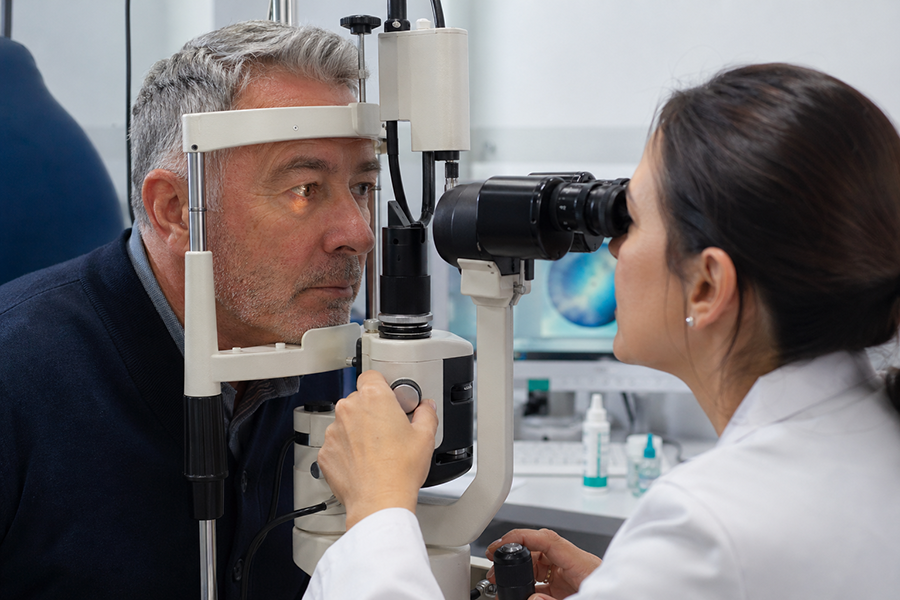
If you have diabetes, you are probably aware of its impact on the retina, but…
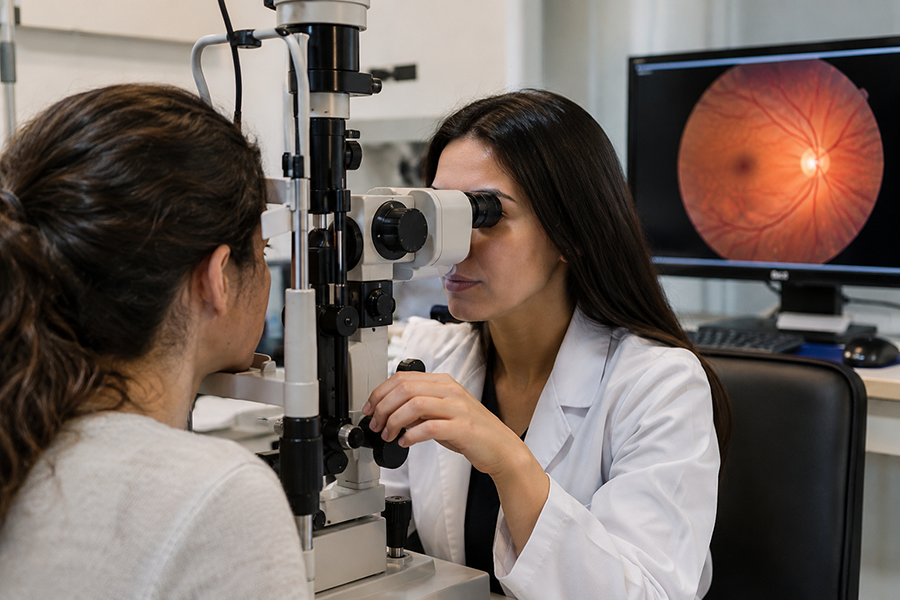
Diabetes and Eye Health: The Retinal Examination You Shouldn’t Skip
World Diabetes Day is celebrated on 14 November. A few months ago, we discussed how diabetes affects the surface of the eye and contributes to dry eye disease. Today, we focus on the most widely recognised and significant eye complication: diabetic retinopathy, one of the leading causes of vision loss among working-age adults and, to a large extent, a preventable condition.
What Is Diabetic Retinopathy?
The retina is the layer at the back of the eye that captures images and is supplied by a network of very fine blood vessels. When blood glucose levels remain high over many years, these vessels become damaged: they may leak fluid or blood, become blocked, or cause new, more fragile blood vessels to develop.
If fluid accumulates in the macula, the central part of the retina responsible for reading and recognising faces, macular oedema develops. This is the most common cause of vision loss in patients with diabetic retinopathy.
The Problem: There Are No Early Warning Signs
In its early stages, diabetic retinopathy causes no symptoms. A person may see perfectly well, read and drive while the disease continues to progress. By the time blurred vision appears, the damage is often already advanced. This is why the only way to detect the condition early is through a retinal examination, even when there are no visual complaints.
The good news is that, when detected early, effective treatments are now available to slow or halt its progression. These include laser treatment, intraocular injections and, in more advanced cases, surgery. The earlier the diagnosis, the better the outcomes.
How Often Should You Have Your Eyes Examined?
People with diabetes should undergo regular retinal examinations, usually once a year, or as frequently as their ophthalmologist recommends based on the findings.
During pregnancy, women with pre-existing diabetes require closer monitoring. If diabetic retinopathy is already present, more frequent examinations will be necessary.
What You Can Do to Protect Your Vision
- Keep your blood glucose levels as stable as possible by following your doctor’s recommendations.
- Monitor your blood pressure and cholesterol levels, as these are also important factors in eye health.
- Avoid smoking and stay physically active.
- Attend regular eye examinations, even if your vision seems perfectly normal.
When You Shouldn’t Wait for Your Next Appointment
Seek medical advice promptly if you experience blurred vision that does not improve, new spots or floaters, straight lines appearing distorted or a loss of vision in one eye.
Sudden vision loss requires urgent medical attention: go to the emergency department of your nearest hospital.
One practical point: sudden changes in blood glucose levels can temporarily affect your glasses prescription for several days. If you have recently started treatment or your diabetes is not well controlled, it is advisable to wait until your blood glucose levels have stabilised before changing your glasses.
Book an Appointment at INOF · Teknon Medical Centre, Consulting Rooms 156–159 · Tel. +34 933 933 156 · WhatsApp +34 640 310 733 · atencionalpaciente@inof.es
Temas relacionados