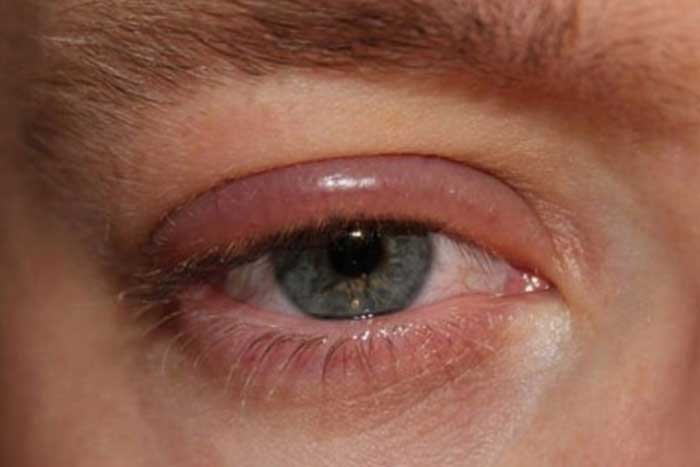
Blepharitis is inflammation or an infection of the eyelids. It can happen occasionally or be…
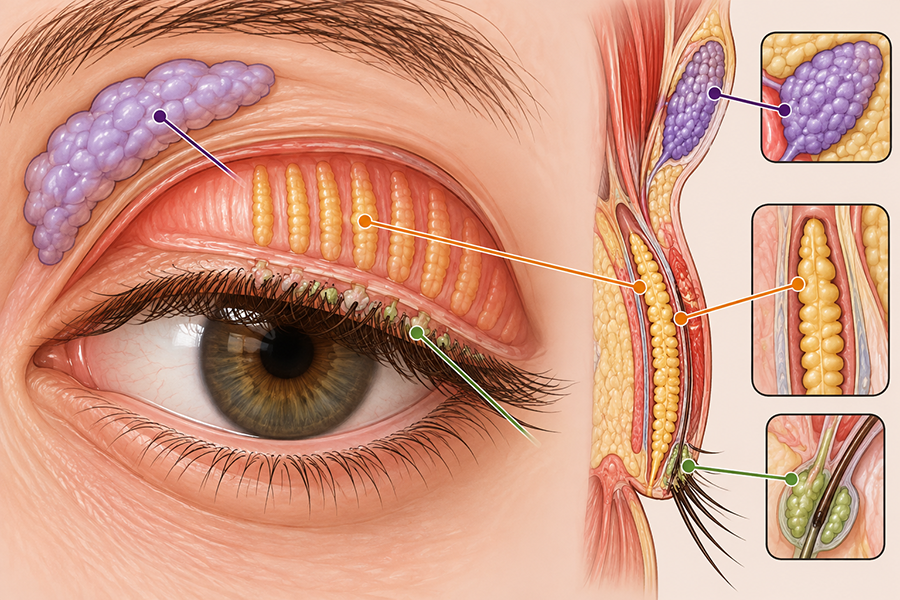
Stye and chalazion
One day, a lump appears on the eyelid – sometimes red and painful, sometimes causing almost no discomfort. It is one of the most common reasons for consulting an ophthalmologist and, although it is almost never serious, it is worth knowing what it is so that it can be treated properly and not made worse.
Two distinct problems
The edge of the eyelids has small glands that produce the oil which protects the tear film. When one of these glands becomes blocked or infected, a lump appears.
| Stye | Chalazion | |
| What is it? | An acute infection of a gland, almost always caused by bacteria | Inflammation caused by a blockage in a gland, without infection |
| What is it like? | Red, hot and painful, near the edge of the eyelid; sometimes with a white spot | A round, firm lump, which is deeper and causes hardly any pain |
| Development | It usually gets better within a few days | It can last for weeks or months |
A stye that does not clear up completely can lead to a chalazion.
What to do at home
1. Apply warm (not hot) compresses to your closed eyelid for about ten minutes, three or four times a day.
2. Afterwards, gently massage the area towards the edge of the eyelid.
3. Keep the edges of your eyelids clean using the eyelid hygiene products recommended to you.
4. Do not squeeze it or try to drain it: this may spread the infection.
5. Avoid eye make-up and contact lenses whilst this is ongoing.
When to seek medical advice
You should consult your doctor if the lump does not improve within one or two weeks, if it grows, if the redness spreads to the rest of the eyelid or your face, if you develop a fever, or if you notice your vision is getting worse. If you have a fever, swelling that closes your eye, or if the condition worsens rapidly, go to the A&E department at your nearest hospital.
When a chalazion persists, an ophthalmologist can treat it with an injection or a minor procedure under local anaesthetic to drain it. If a lump keeps reappearing in the same place, particularly in adults, it is advisable to have it investigated to rule out other conditions.
Why they recur
Recurrent styes and chalazions are usually caused by blepharitis, a chronic inflammation of the eyelid margins, often associated with dry eye or skin conditions such as rosacea. In these cases, daily eyelid hygiene is the best form of prevention. In children with frequent chalazions, it is also advisable to have their eyes tested for short-sightedness.
If you have a lump on your eyelid that won’t go away, we can assess you at INOF, at the Teknon Medical Centre.
Temas relacionados