Strabismus — a condition in which the eyes do not focus on exactly the same…
Paediatric strabismus: six misconceptions that need to be dispelled
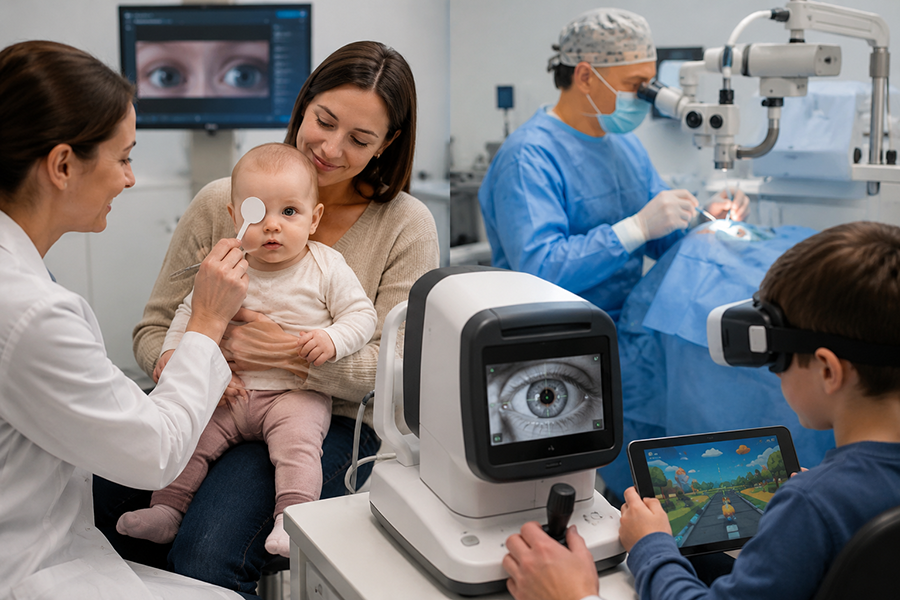
When a child has a squint, parents receive a lot of well-meaning advice. Some of this, however, can delay treatment that is most effective when started as early as possible. We look at six common misconceptions.
1. ‘It will sort itself out as they get older’
Persistent strabismus does not usually correct itself. It is normal for a baby’s eyes to become misaligned from time to time during the first few months, and sometimes the shape of the nose or eyelids can give the false impression of a squint (pseudo-strabismus). However, only a proper examination can distinguish between the two.
2. ‘It’s just a cosmetic issue’
In children, strabismus can lead to a lazy eye (the brain stops using the image from the deviating eye) and impair depth perception, which enables us to judge distances. That is why it is treated even if it is barely noticeable.
3. ‘Glasses make it worse or will make them dependent on them’
In some types of strabismus, particularly those linked to long-sightedness, glasses are actually the treatment and can straighten the eyes. Wearing them does not create a dependency: they correct the problem whilst it exists.
4. “The eye patch is worn over the crooked eye”
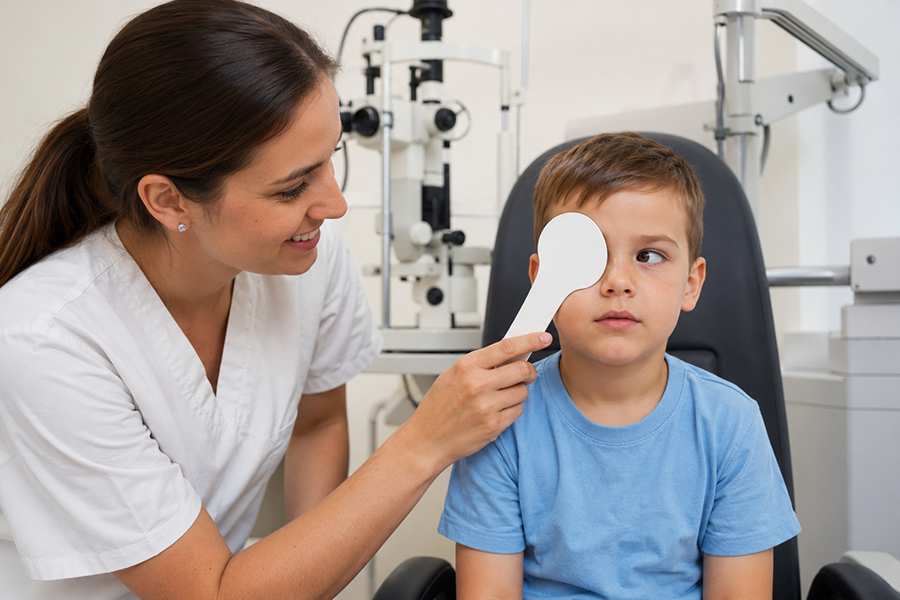
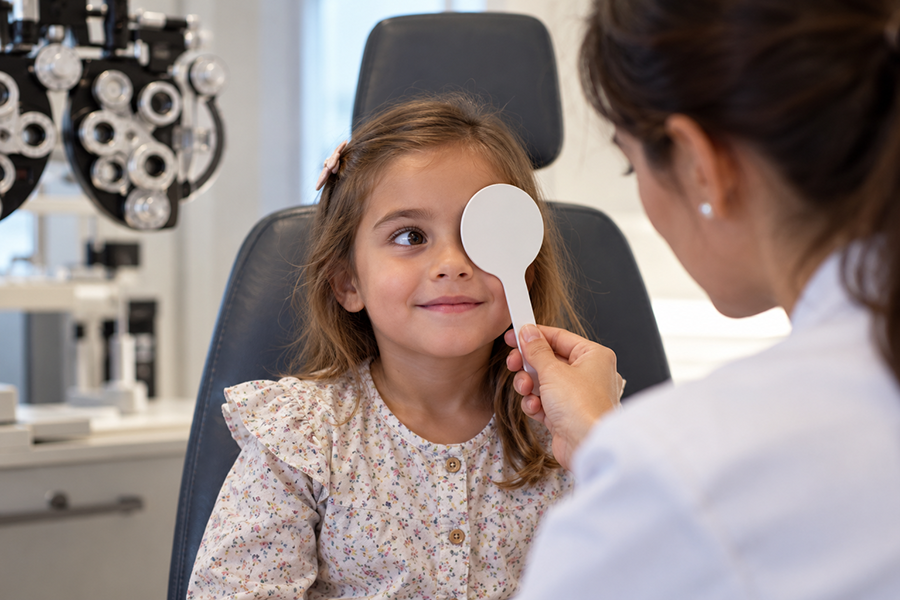
It’s the other way round. In cases of lazy eye, the eye patch is worn over the eye that sees better, to force the brain to use the weaker eye. The duration and regimen are decided by the ophthalmologist on a case-by-case basis.
5. ‘We have to wait until they’re older to have the operation’
There is no set age. It depends on the type of strabismus: in some cases, it’s best to operate early to help both eyes work together, whilst in others, glasses, an eye patch or other treatments are tried first.
6. “Once the operation has been carried out, the problem is sorted for good.”
Surgery corrects the position of the eyes, but it is often necessary to continue wearing glasses or an eye patch and to attend follow-up appointments, and sometimes more than one operation is required. Follow-up care is part of the treatment.
At INOF
Dr Dora Fernández-Agrafojo is a specialist in paediatric ophthalmology and strabismus. At the first appointment, we assess the deviation, prescription and vision in each eye, and explain the treatment options to the family.
Would you like an assessment? You can book an appointment on 640 310 733 or at atencionalpaciente@inof.es. INOF clinic at the Teknon Medical Centre, C/ Vilana 12, consultation rooms 156–159, 08022 Barcelona.
*Dr Dora Fernández-Agrafojo · INOF, Binocular Vision, Strabismus and Neuro-ophthalmology Unit*
Temas relacionados