To see things up close, the eye focuses thanks to a small internal muscle, the…
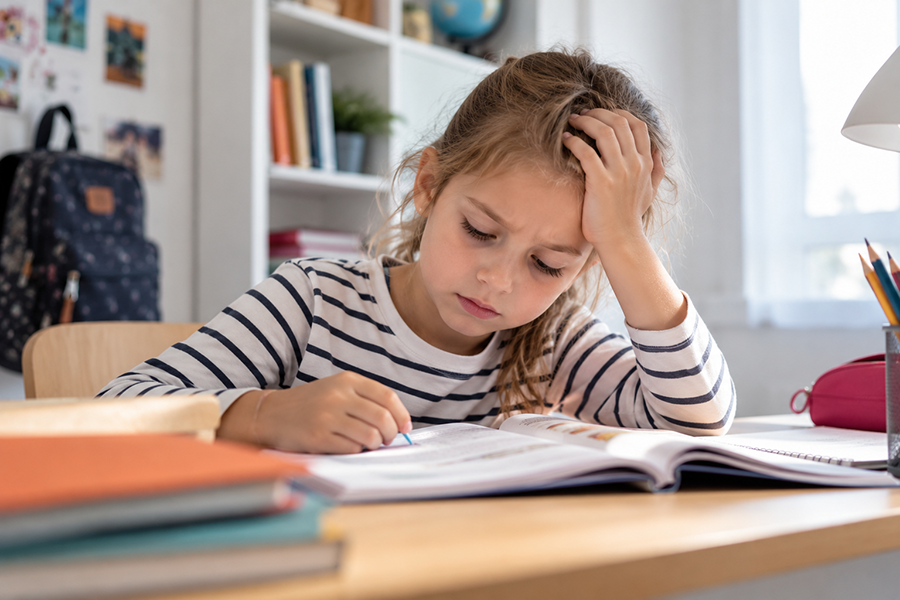
Six signs that your child’s eyesight is not good
September is the month when the most paediatric ophthalmology appointments are booked, and this is no coincidence. During the summer, children spend time outdoors, looking at things from a distance, without any sustained need for close-up vision. As soon as the new school term begins, reading, the blackboard, homework and long periods of sustained concentration come into play, and what was previously compensated for is no longer.
The problem is that a child almost never says they can’t see properly. They have nothing to compare it with: to them, that’s just how things look. That’s why it’s important to know the signs that indicate a visual difficulty.
The six signs
- They get very close. To paper, a book, a screen or the television, consistently rather than just occasionally.
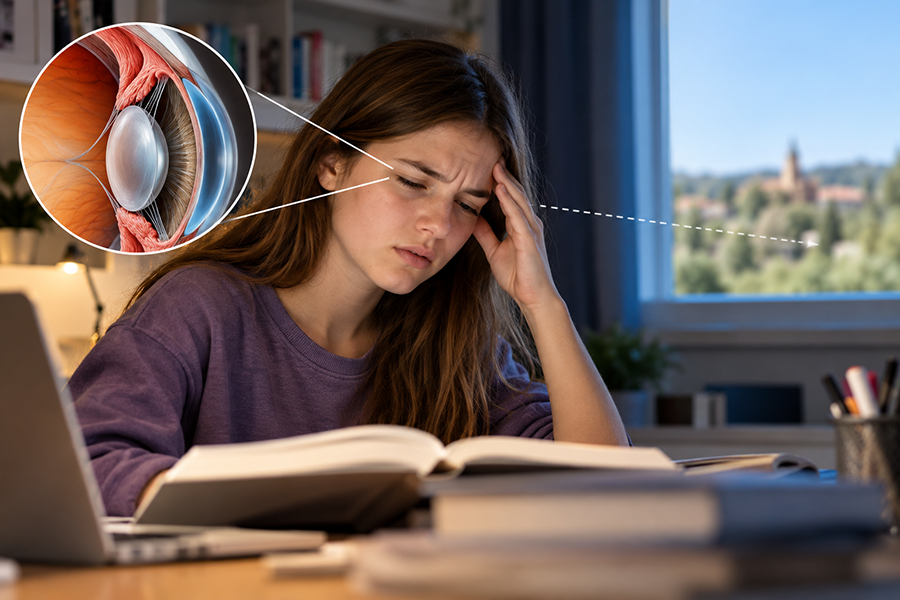
- They squint, frown or tilt their head. Closing one eye to see better or always adopting the same head position is not a tic: it is a strategy to compensate.
- They get tired or distracted whilst reading. They start off well but after ten minutes they get up, lose their place or skip words. This is often interpreted as a lack of interest.
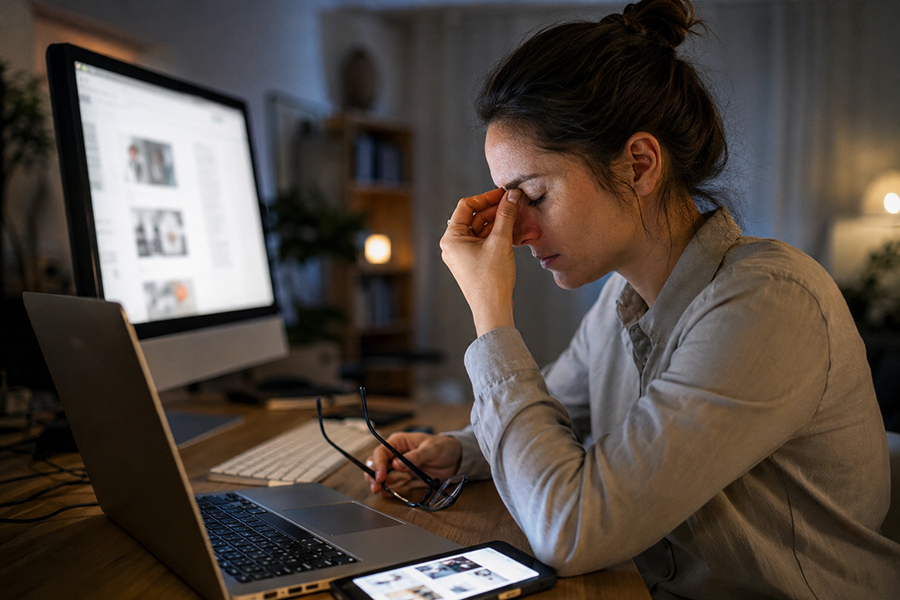
- They complain of a headache when they come home from school. Especially if the pain is in the forehead or around the eyes, and it recurs on days when there is a heavier workload involving close-up tasks.
- They rub their eyes persistently or blink a lot. Especially after prolonged close-up tasks.
- They have difficulty judging distances. They struggle to catch a ball, trip when going down stairs or bump into door frames.
Added to this is a sign that parents spot straight away and which requires immediate assessment: one eye turning inwards, even if only occasionally or only when the child is tired. After the first few months of life, an eye turning inwards is never normal and does not correct itself over time.
At what age should an eye test be carried out?
The general recommendation is for a first eye test at around three or four years of age, before the child starts learning to read, even if there are no symptoms. An earlier test is advised if there is a family history of strabismus, lazy eye or severe refractive errors, or if any of the above signs are observed.
The reason for this is that much of visual development takes place in the early years. Detecting a weaker eye early on allows it to be treated whilst the visual system is still responsive, and this window of opportunity does not remain open indefinitely.
How does this differ from a school eye test or an optician’s eye test?
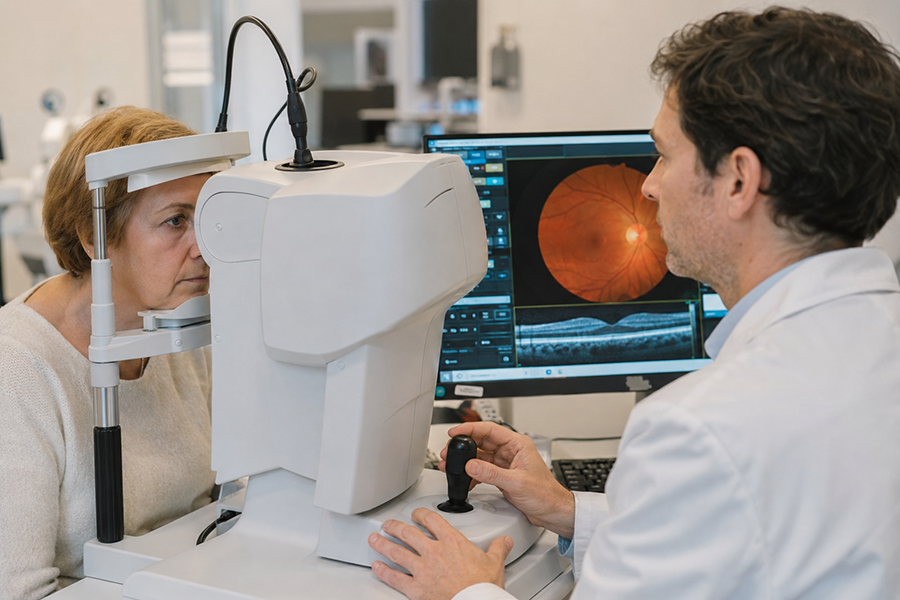
School screening programmes and optician’s eye tests serve a useful screening purpose, but they primarily measure visual acuity. A comprehensive paediatric eye examination also includes testing for refractive errors under controlled conditions, assessing eye alignment and eye movement, evaluating binocular vision and depth perception, and examining the back of the eye.
These are different things, and the former does not replace the latter.
Temas relacionados